Blog
Amazon Buy Box Explained: What It Is, How It Works, and How to Win It
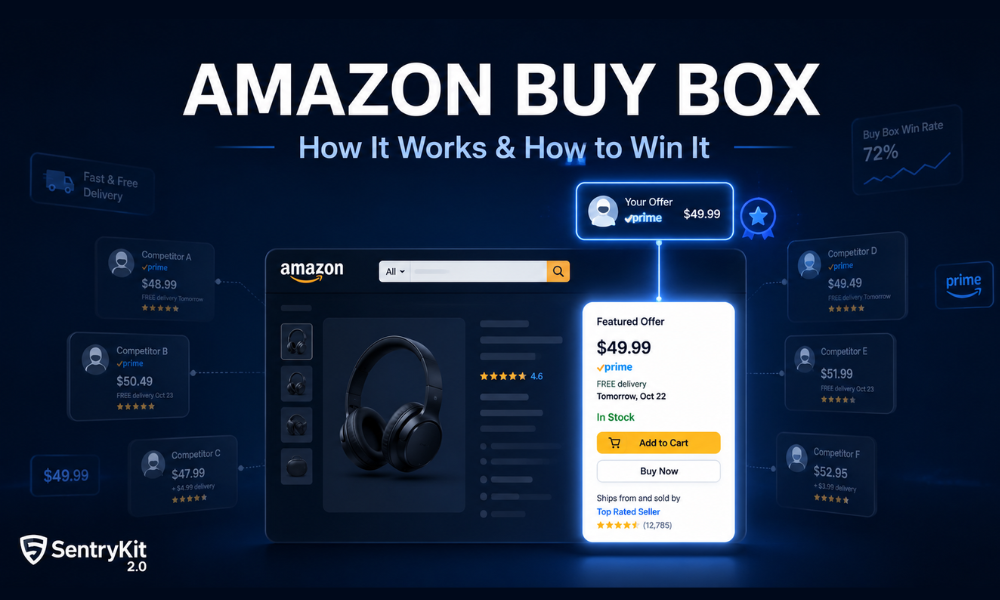
The Amazon Buy Box determines who gets the sale when multiple sellers list the same product. Here’s how it works, what Buy Box Wins means, and how to hold it.

The Amazon Buy Box determines who gets the sale when multiple sellers list the same product. Here’s how it works, what Buy Box Wins means, and how to hold it.
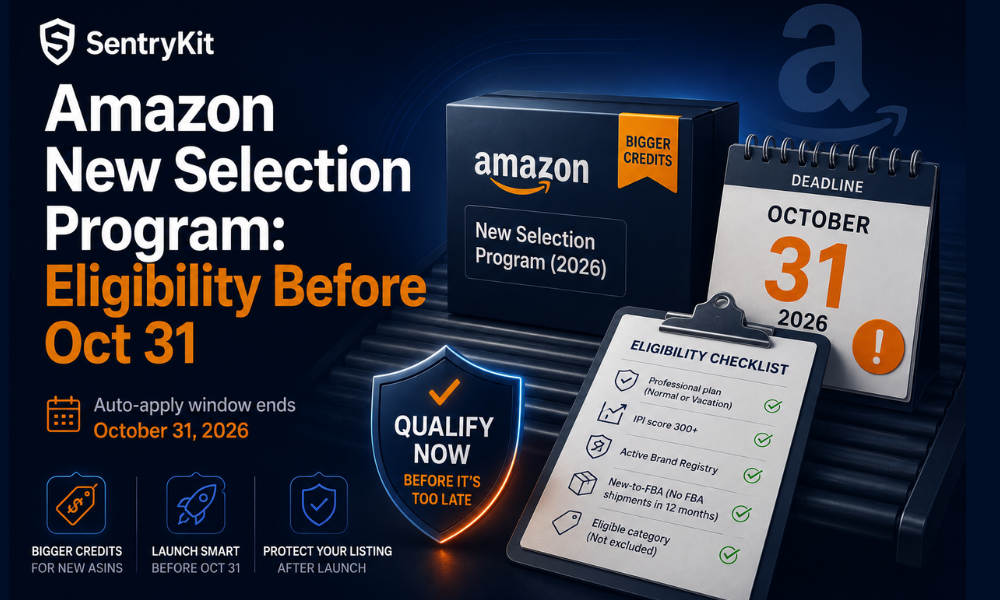
Amazon’s New Selection Program auto-applies fee credits to eligible new branded ASINs — but only through October 31, 2026, and only if your ASIN clears a specific set of account- and ASIN-level criteria. Here’s the full eligibility checklist, what commonly disqualifies a launch, and why Buy Box risk is a separate problem from the credit itself.
Amazon is rolling out passkeys to every Seller Central account this July — a real fix for credential phishing. But passkeys only guard the login screen. They won’t catch a Buy Box hijack, a fraudulent brand claim, or a listing Amazon changes on its own. Here’s the gap sellers still need to watch.

Google’s Universal Commerce Protocol just went live inside AI Mode search, letting shoppers buy directly from results with no storefront involved. It’s limited to a couple of retailers, and Amazon isn’t one of them yet. Here’s why sellers should watch this closely, not react to it.
A bad actor can file a trademark on your brand name, enroll in Amazon Brand Registry, and get your real listings suspended — and it looks nothing like a typical hijack. Here’s how the fraud pattern actually works, what you can do to prevent it, and why SentryKit’s role starts only after a claim already succeeds.
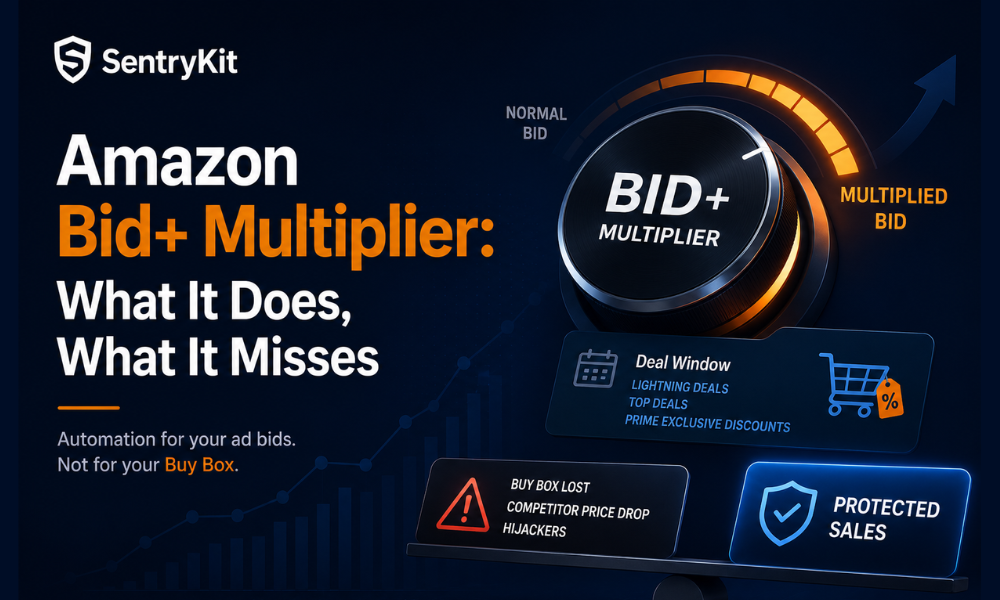
Amazon’s new Bid+ Multiplier auto-raises ad bids during Lightning Deals and Prime Exclusive Discounts, then dials them back after. It has no visibility into who’s holding your Buy Box while it does. Here’s what to check before and during a deal window so higher ad spend doesn’t end up funding a competitor’s sale.
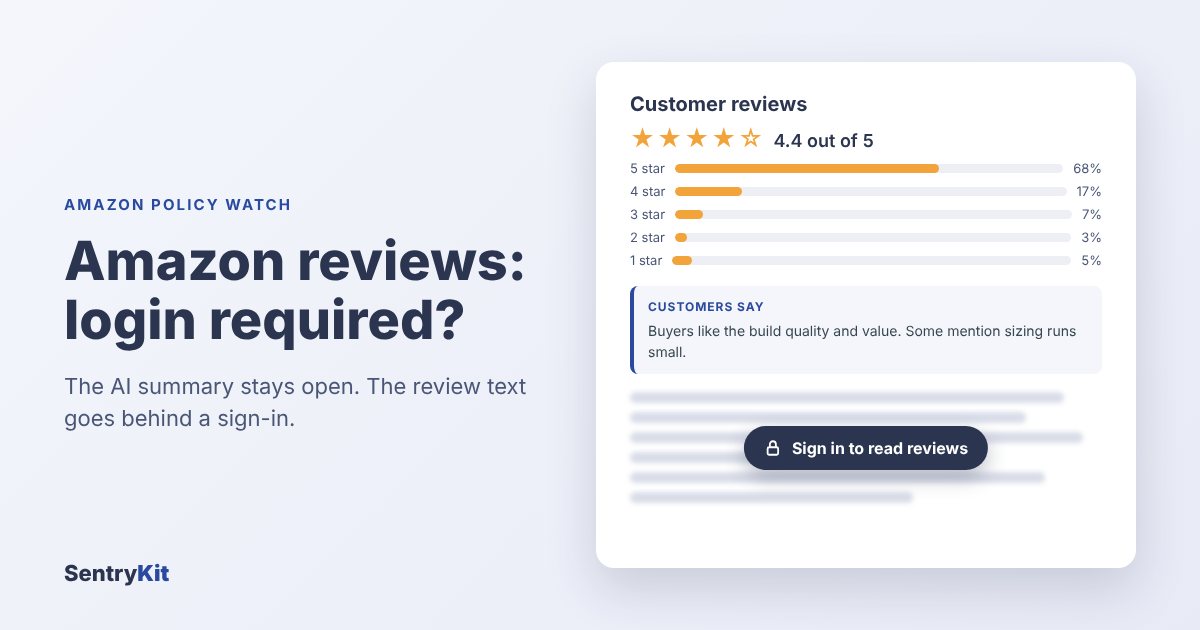
Amazon is quietly testing a login wall on reviews while keeping its AI “Customers say” summary open to everyone. I don’t think this is about reviews — it’s an early signal of a much bigger bet on who controls access to Amazon’s data as it pours billions into AI infrastructure.
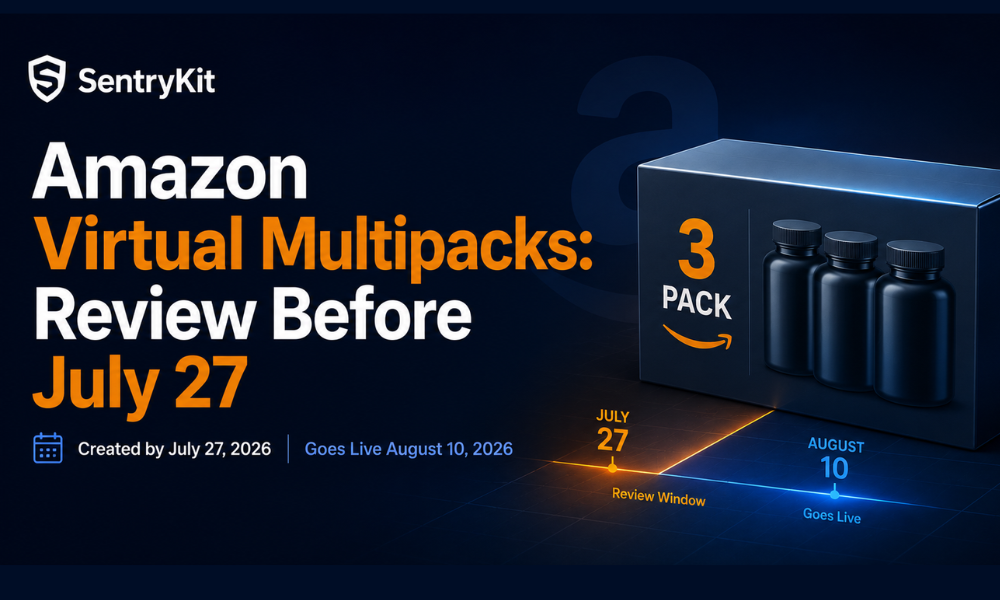
Amazon is auto-creating Virtual Multipack listings on eligible single-pack ASINs — no request needed. You have until July 27 to see what’s been created and until August 10 to edit or delete it before it goes live. Here’s exactly where to check and what to do next.
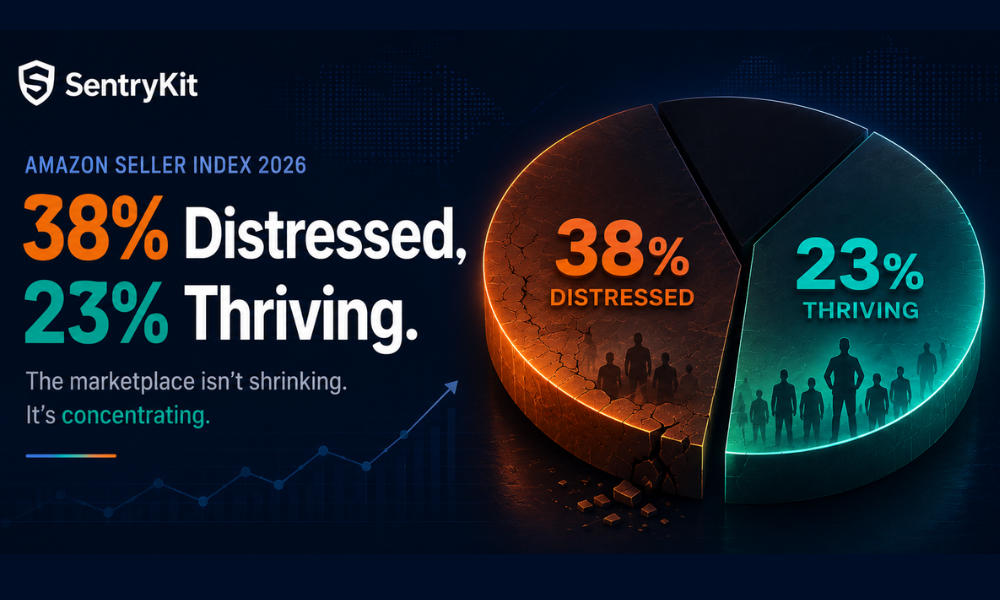
Marketplace Pulse’s 2026 Seller Index found 38% of Amazon sellers distressed and only 23% thriving — and I don’t think that’s a competition story. It’s a margin story: fees and ad spend are quietly eroding P&Ls while unit share keeps consolidating toward fewer sellers. Here’s what actually separates the two groups, and it isn’t tooling.
From July 20, Amazon removes the Buy Box performance eligibility bar in the UK and EU — a separate mechanic from seller selection. The practical risk: unauthorised sellers no longer need a performance track record to compete for your Buy Box. Here’s what to watch.