
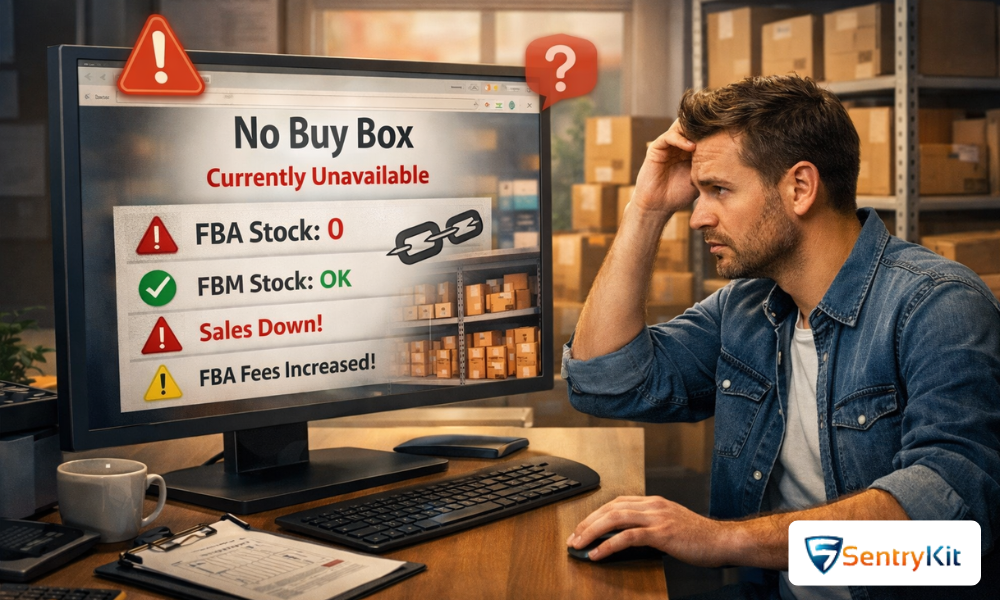
Inventory issues on Amazon don’t just impact your stock levels—they directly affect your rankings, Buy Box ownership, profitability, and long-term growth. A single stockout can undo weeks of momentum, while unnoticed fee changes can quietly eat into your margins.
The challenge is that most inventory problems don’t happen suddenly—they build up over time and go unnoticed until the damage is already done.
In this guide, we break down the most critical Amazon inventory alerts sellers need to monitor, including FBA stock, FBM stock, sales volume, and FBA fee changes. More importantly, we’ll show you how to detect issues early and prevent them from affecting your business.
Inventory is one of the most important—and most overlooked—factors in Amazon success.
When inventory is not properly managed:
Listings lose ranking due to stockouts
Buy Box ownership becomes unstable
Storage fees increase due to overstocking
Sales opportunities are missed due to poor forecasting
Even short-term disruptions can have long-term consequences. For example, running out of stock for just a few days can significantly reduce your product’s visibility, making it harder to recover rankings.
At the same time, holding too much inventory can lead to increased storage costs, especially with long-term FBA storage fees.
This is why successful sellers rely on continuous inventory monitoring and alerts, rather than manual tracking.
To stay ahead of inventory issues, sellers need visibility into multiple moving parts—not just stock levels.
Fulfilled by Amazon (FBA) simplifies logistics, but it also introduces new risks if inventory isn’t closely monitored.
Low stock levels
Restock timelines
Inbound shipment delays
Stranded inventory
Running out of FBA stock can immediately result in:
Loss of Buy Box
Drop in rankings
Decreased sales velocity
Even worse, recovery is not instant. Once your listing loses momentum, it can take time to regain its previous position.
This is why many sellers use FBA Stock Alerts to track inventory levels and receive notifications before stock runs out.
For sellers managing their own fulfillment, inventory control becomes even more critical.
Overselling due to inaccurate stock counts
Delayed updates between systems
Manual errors in inventory tracking
Unlike FBA, where Amazon manages fulfillment, FBM sellers are responsible for maintaining accurate inventory at all times.
Using FBM Stock Alerts helps ensure stock levels are always aligned, reducing the risk of cancellations and negative seller metrics.
Inventory decisions are only as good as your understanding of demand.
Sudden spikes may indicate a trend or opportunity
Sudden drops may signal listing issues or competition
Seasonal changes can affect demand patterns
Without tracking sales volume in real time, sellers risk:
Running out of stock during high demand
Overstocking during slow periods
Sales Volume Alerts allow you to respond quickly to demand changes, ensuring your inventory strategy stays aligned with actual performance.
One of the most overlooked aspects of inventory management is cost monitoring.
Amazon frequently updates its fee structure, including:
Fulfillment fees
Storage fees
Long-term storage penalties
These changes can directly impact your margins—often without immediate visibility.
A product that was previously profitable may become unprofitable overnight due to fee increases.
With FBA Fee Change Alerts, sellers can track cost changes in real time and adjust pricing or inventory strategies accordingly.
Even experienced sellers encounter inventory-related challenges. The key is identifying them early.
One of the most damaging issues. Stockouts lead to:
Ranking loss
Reduced visibility
Lower sales velocity
Holding excess inventory increases costs, especially with long-term storage fees.
Without accurate sales data, sellers either:
Understock (lose sales)
Overstock (increase costs)
Fee changes often go unnoticed until margins shrink significantly.
Most sellers rely on periodic checks, spreadsheets, or dashboards. The problem is that inventory changes constantly.
By the time an issue is noticed:
Stock may already be depleted
Fees may already have changed
Sales trends may have shifted
Inventory levels dropping faster than expected
Sudden spikes or drops in sales
Changes in fulfillment costs
Delays in restocking
Manual monitoring simply cannot keep up with these variables at scale.
This is where automation becomes essential.
Prevention is always more effective than recovery.
Use historical data and trends to predict future demand.
Always keep buffer inventory to handle unexpected spikes.
Ensure inventory is restocked before it reaches critical levels.
Track FBA fees and adjust pricing strategies accordingly.
Relying on alerts instead of manual checks ensures you never miss critical changes.
Inventory conditions can change at any moment. Without real-time visibility, sellers are always reacting late.
Real-time alerts provide:
Instant notification of low stock levels
Visibility into demand changes
Alerts for fee updates
Continuous monitoring without manual effort
Instead of reacting to problems after they occur, sellers can take proactive action to prevent them entirely.
Inventory is directly connected to other critical areas of your Amazon business.
Low stock → Increased risk of losing the Buy Box
Stockouts → Listing suppression or reduced visibility
Overstock → Pricing pressure and margin loss
Maintaining healthy inventory levels supports:
Stable rankings
Consistent sales
Better Buy Box retention
Amazon inventory management is more than just tracking stock—it’s about maintaining the balance between availability, demand, and profitability.
From FBA stock levels to sales trends and fee changes, every aspect of inventory plays a role in your overall performance.
Sellers who rely on manual tracking often find themselves reacting too late. Those who use real-time alerts gain a critical advantage by detecting issues early and acting before they impact revenue.
The key to long-term success isn’t just managing inventory—it’s staying ahead of it.
Running out of stock can lead to a drop in rankings, loss of Buy Box ownership, and decreased sales velocity. Recovery can take time even after restocking.
You can track FBA inventory through Seller Central, but many sellers use automated alerts to receive real-time notifications when stock levels are low or at risk.
Amazon periodically updates fulfillment and storage fees. Changes in product size, weight, or storage duration can also impact costs.
Sales volume can be predicted using historical data, seasonal trends, and market demand. Real-time monitoring helps adjust forecasts dynamically.
Maintaining safety stock, forecasting demand accurately, and using real-time alerts are the most effective ways to prevent stockouts.
Low inventory or stockouts can result in losing the Buy Box, as Amazon prioritizes sellers who can consistently fulfill orders.